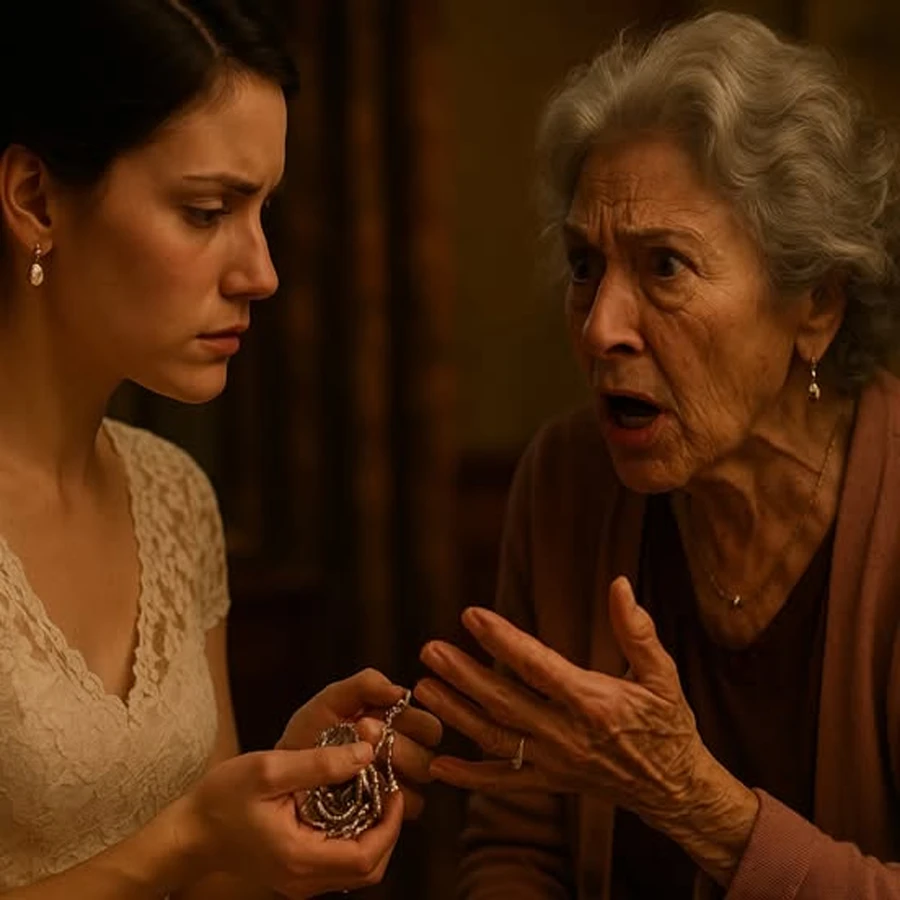
Mother-in-law gave away my jewelry to her friends and said: “You are just a servant for my son, don’t you dare complain.
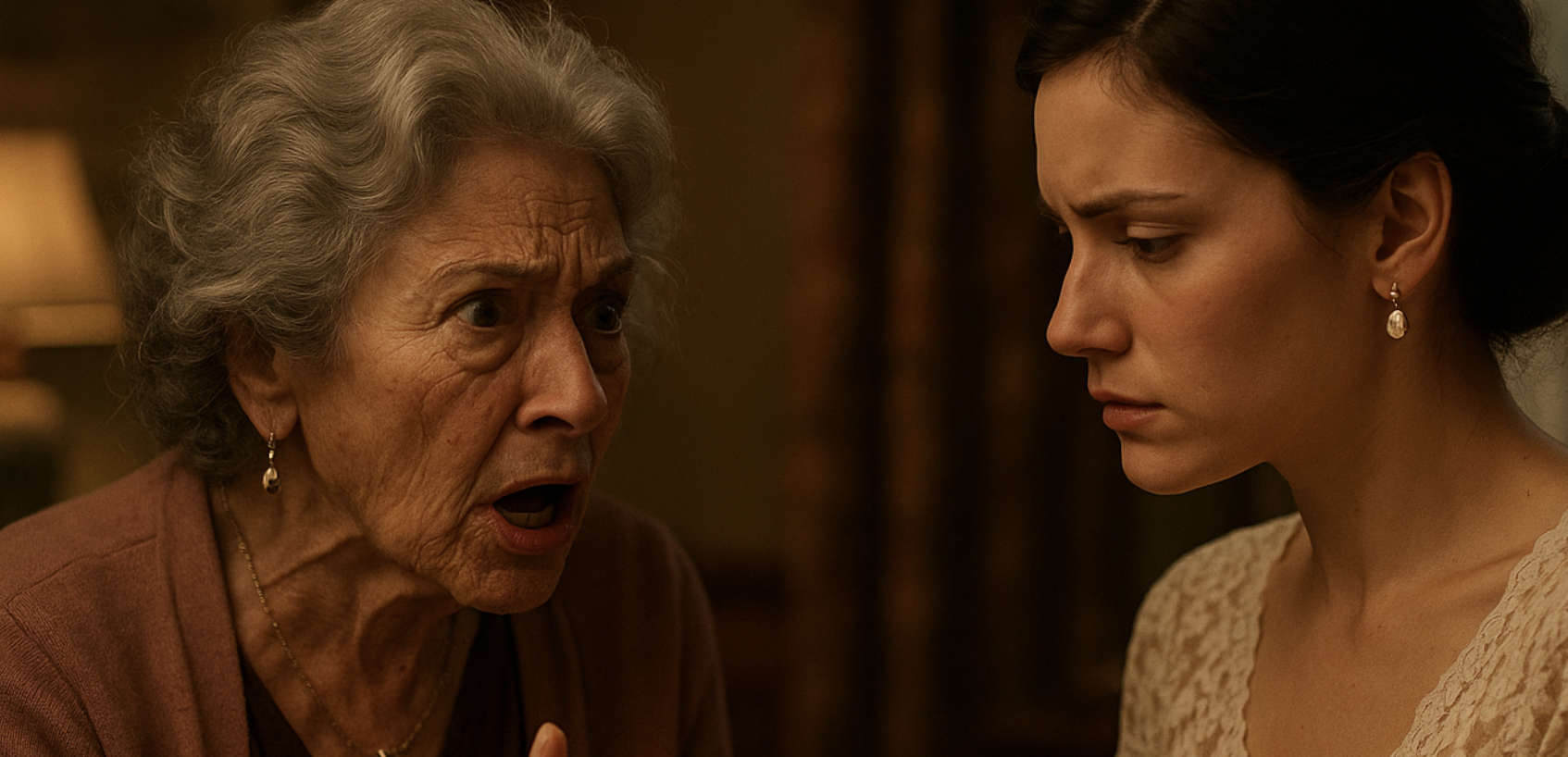
Mother-in-law gave away my jewelry to her friends and said: “You are just a servant for my son, don’t you dare complain.
Mashenka, be a dear and pour us some tea,” asked my mother-in-law, not even looking up from the phone screen when I entered the living room after a long day at work.
Her friends had already settled on the couch, like three crows on a wire. Something was gleaming on the coffee table. I froze—it was my jewelry box!
“Yelena Pavlovna, why is my box here?” I tried to speak calmly, though my insides were in turmoil.
“What’s wrong with that?” She finally looked at me. “I’m just showing the girls how much Alexey has spent… I don’t understand, why do you care?”
Valentina, one of her friends, was already trying on my emerald earrings—gifts from Lesha on our anniversary.
“These are my things,” I said, walking toward the table, but my mother-in-law quickly stood up, blocking the way.
“Yours?” she smirked. “My dear, everything in this house belongs to my son. Which means it belongs to me. You’re just here temporarily until Alyosha figures out what a mistake he made.”
I clenched my fists. Three years of marriage, and every day was a test. Lesha was away on another business trip, leaving me defenseless.
“Please, return the jewelry,” I addressed the women directly.
“Oh, how strict!” Valentina giggled. “Len, she’s got a character!”
“Character has nothing to do with it,” my mother-in-law interrupted. “Go to the kitchen, there’s dirty dishware. And make dinner—we decided to stay.”
The women exchanged knowing glances. One of them had already put on my bracelet—a gift from my mother.
“Please take it off,” my voice betrayed me with a quiver.
“What’s going to happen if we don’t?” Yelena Pavlovna laughed. “Are you going to run and complain to your husband? He’s always on my side. Remember, he said before he left, ‘Mom, keep an eye on her, she’s so helpless.’”
It was a blatant lie. But arguing was pointless.
“I’ll take my things,” I tried to walk past.
“You’ll take only what I allow you. Now, march to the kitchen. Valya wanted your famous salad. The one you make with my recipe.”
The women burst into laughter. I yanked my hand free and headed for the door. I turned on the threshold: “You’re mistaken if you think I’ll put up with this any longer.”
“Where are you going to go?” my mother-in-law smiled coldly. “Without my son, you’re nothing. Just a regular provincial girl who got lucky. So, behave accordingly.”
I left them to divide my valuables, like precious treasure. In the kitchen, I took out my phone.
Lesha wasn’t answering—the connection was poor in his region. But I knew what to do. Yelena Pavlovna had made a mistake, thinking I was weak.
The next morning I woke up with a clear plan. My mother-in-law was still asleep—they had stayed up late with her friends, drinking wine from our cellar.
By the way, our wine was a collection that Lesha and I had put together during our travels.
I quietly entered my husband’s office. The safe contained documents that my mother-in-law may have forgotten about… or thought I didn’t know the code. But Lesha trusted me with everything.
“What are you doing here?” came an irritated voice.
My mother-in-law stood in the doorway, disheveled and angry.
“I’m working with some papers,” I calmly replied, pulling out the necessary folder.
“In my son’s office? Without permission?” She moved toward me. “Put everything back right now!”
“This is the power of attorney for the company’s financial transactions,” I showed her the document. “Lesha signed it for me before leaving. In case of emergencies.”
Her face turned pale.
“It can’t be…”
“It can. And here are the receipts for all the jewelry. Most of it I bought myself, with my own money. I worked in a design studio, remember how you mocked me for that?”
“You did it on purpose!” She clutched the doorframe. “You charmed my son!”
“I love your son. And he loves me. And you just can’t accept that.”
My mother-in-law turned red.
“Who are you, really? You came from nowhere, trying to act like the lady of the house! You’re just a servant to my son, don’t you dare complain! I’m his mother, I know better what he needs!”
“A servant?” I sneered. “Interesting remark. Want to know why Lesha gave me the power of attorney?”
She was silent, staring intently at me.
“Because three months ago, there were suspicious withdrawals from the corporate card. Boutiques, restaurants, spa treatments—all charged to you, Yelena Pavlovna. Lesha knew you wanted a share of the business.”
“That… he allowed it!”
“Allowed spending two hundred thousand a month?” I shook my head. “I have the receipts and the correspondence from your friends, where you boast about how ‘cleverly’ you’re manipulating your son.”
My mother-in-law stepped back.
“Where did you…”
“Valentina left her phone on the table—unlocked. Do you know what she told me when I showed her the correspondence with the fitness trainer?”
A heavy silence hung between us. Yelena Pavlovna opened her mouth, but no words came out. “The jewelry needs to be here by evening,” I continued. “And no more unscheduled visits. Leave the keys on the table.”
“You have no right! This is my son’s house!”
“Our house. We bought it together. I contributed half of the cost—I sold the apartment I inherited from my grandmother. The one you called ‘a hut in the village.’”
I handed her another document:
“This is a police report. It hasn’t been filed yet. But if the jewelry isn’t returned…”
“You’re resorting to blackmail!” she hissed.
“No. Just a woman who knows how to defend what’s hers. Unlike that ‘quiet one’ you thought was weak.”
That evening, the courier delivered a neatly packed box. All the jewelry was there. Inside was a note from Valentina: “Sorry, we didn’t know Lena would go this far.”
I carefully put the box in the safe and called Lesha. This time, he answered immediately:
“Hey, darling! How’s home? Is mom bothering you too much?”
“Everything’s great,” I smiled. “Your mom and I finally came to an agreement.”
“Seriously? How did you manage that?”
“Productively. I think now she’ll call before visiting.”
“Masha, you’re a magician! I’ve been trying to talk to her for years!”
“I just found the right arguments,” I laughed. “Thanks for the power of attorney. It really helped.”
“I told you, just in case,” his voice was filled with joy. “I love you.”
“And I love you. Another week, and you’ll be home. Want me to make that salad?”
“Of course. But let’s be honest—it’s not mom’s recipe, right?”
“Right. It’s my grandmother’s recipe from that same ‘province.’”
Lesha laughed:
“I knew it! Mom never knew how to cook well!”
After the call, I went to the kitchen. On the table were the keys and a note. The handwriting was familiar, but the hand trembled: “I hope you’re satisfied. Though I think your son could have found a better partner.”
I crumpled the paper and threw it away. Yelena Pavlovna never understood the most important thing—it doesn’t matter who’s “better” or “worse.”
What matters is love, respect, and the ability to stand up for yourself when necessary.
The sun was setting outside. I poured a glass of wine from the cellar and raised it to small victories. Sometimes, to become the mistress of your life, all you need to do is stop playing the role of a servant. Especially when someone expects you to.
Three days after our confrontation, the doorbell rang. When I opened it, I saw a stranger, around thirty-five years old—stylishly dressed, with a weary look in her eyes.
“Are you Maria? Alexey Petrovich’s wife?”
“Yes. And you?”
“Inna. We need to talk. It’s about your mother-in-law.”
Something in her tone made me invite her in. We walked to the living room. She scanned the room with a keen eye, as if looking for something familiar.
“You have a very cozy place. Yelena Pavlovna says you’ve decorated the house poorly, but that’s not true.”
“How do you know my mother-in-law?”
Inna gave a bitter smile:
“I was married to her eldest son—Igor.”
I gasped. Lesha had told me that his brother died in a car crash ten years ago, but he had never mentioned his wife.
“But… Yelena Pavlovna said Igor had no family.”
“Of course, she did,” Inna took out a folder from her bag. “Because I didn’t fit her idea of a daughter-in-law. Just like you now.”
She handed me photographs: young Inna, with Igor—who looked exactly like Lesha, only a little older, and in the background, Yelena Pavlovna with the same dismissive expression on her face.
“She’s the one who drove Igor to the point where he got behind the wheel drunk,” Inna’s voice trembled. “Endless arguments, demands to divorce me, threats to disinherit me… That night she said she would stop funding ‘this useless person.’”
“My God…”
“I tried to talk to Alexey, but Yelena Pavlovna painted me as a hysterical woman who ruined her son’s life. He was studying abroad at the time, only returned for the funeral. We never met.”
Inna handed me another document:
“This is Igor’s real will. He left me half of the father’s business. The same one that Alexey is managing now.”
I flipped through the papers. Everything seemed official and authentic.
“Why did you come now?”
“Valentina called me—your mother-in-law’s friend. She told me about your conflict and said that you were the first not to be afraid and stood up to her. And I decided—it’s time to set things straight.”
“Do you want to claim a share of the business?”
“No,” Inna shook her head. “I want Alexey to know the truth about his brother. And about how their grandmother really died.”
“What do you mean?” I felt a chill run down my spine.
“Yelena Pavlovna gave the grandmother medications that were contraindicated for her. I accidentally found the prescriptions. When I tried to tell Igor, she accused me of wanting to break up the family.”
My phone rang. It was Lesha.
“Hey, darling! I’m flying out earlier! I’ll be there tomorrow morning! I miss you so much!”
“Lesha…” I looked at Inna. “Okay. We’ll be waiting for you.”
“We?”
“I’ll explain when we meet.”
After hanging up, I addressed my guest:
“Stay until tomorrow. Lesha needs to hear this from you.”
“What if he doesn’t believe me?”
“He will. I’ll make sure of it.”
The next morning there was tension in the air. Lesha arrived happy, with gifts, but when he saw Inna, he froze: “Hello, Alyosha,” she said, standing up. “We need to talk.”
Their conversation lasted two hours. I sat next to them, holding my husband’s hand while he learned the truth about his brother, about his grandmother, about the long years of deception.
“It can’t be…” he shook his head, but his eyes already showed realization.
“It can,” Inna answered softly. “How could she give your wife’s jewelry to her friends? How could she control the company’s money? Yelena Pavlovna thinks the world belongs to her by right.”
Lesha stood up and started pacing the room:
“Documents about grandmother… where’s the proof?”
“In her personal safe,” Inna gave the code. “Igor showed me before he died. She kept all the prescriptions and notes there. Just in case.”
“Are you sure she hasn’t destroyed them?”
“Six months ago, she even tried to scare me with copies. After I tried to contact you through the office.”
“What?!” Lesha turned sharply. “Your message was received by the secretary. She said you were a fraud and that I didn’t want to see you.”
“Then Yelena Pavlovna called me,” Inna continued. “She warned me she would file a police report if I tried to reach you again. And she showed copies of the documents—saying she’d prove I ruined Igor and caused grandmother’s death.”
Lesha clenched his fists, then dialed the number:
“Mom? Come right now. This isn’t up for discussion.”
Yelena Pavlovna arrived an hour later, as dignified as ever:
“Alexey, why did you call me so early? And why is this woman here?”
She noticed Inna, and her face went pale.
“Mom,” Lesha’s voice was icy. “Where are the keys to your safe?”
“What safe? I don’t understand…”
“The one where you keep the documents about grandmother. And the original will of Igor.”
A pause followed. Then my mother-in-law straightened up:
“I don’t know what this fraud has told you, but…”
“The code is 1703,” Lesha interrupted. “Igor’s birthday. Either you open the safe yourself, or I’ll call a specialist.”
“You wouldn’t dare!”
“I would dare. Just like you dared to deceive me all these years.”
My mother-in-law shot me a hateful look:
“This is all your fault! You turned my son against his mother!”
“No, Yelena Pavlovna,” I shook my head. “You boxed yourself in with lies, pressure, and greed.”
“I did everything for my children!” she screamed.
“You did everything for yourself,” Inna said quietly. “And you lost one of them.”
Yelena Pavlovna staggered. Lesha helped her sit down:
“Mom, just tell the truth. For once.”
And she broke down. Crying, she confessed that she had forged the will, that she had given grandmother dangerous medications to “speed things up,” and that she had driven Igor to ruin because he was planning to figure everything out.
“I wanted my children to have everything! To not be involved with those who weren’t suitable for them!”
“Igor and I loved our women,” Lesha said, hugging me.
Next came lawyers, courts, and the division of assets. Inna refused her share and passed it on to the Igor charity fund.
Yelena Pavlovna moved to the country house her husband had once given her.
“You know what’s the scariest thing?” Lesha said a month later. “I always felt something was off. But I didn’t want to believe it.”
“Now it’s all behind us.”
“Thanks to you. If you hadn’t stopped mom back then with the jewelry… Inna wouldn’t have dared to come.”
I leaned against him. On the mantle stood a new photograph—we four: me, Lesha, Inna, and her new husband. The family we chose for ourselves.
And the jewelry box now sat in the most prominent spot. A reminder: never let anyone call you a servant. Especially when it’s your mother-in-law.