
At 77, José María Napoleón shocks the world 😱 with a confession that redefines his legacy. The Mexican icon, famous for his timeless romantic ballads, unveiled a truth that left fans speechless and the media stunned, turning nostalgia into controversy and shaking the foundations of Latin music.
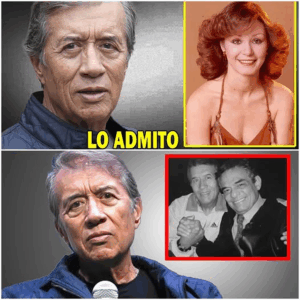
For decades, José María Napoleón has been a figure of quiet elegance in Latin American music. Nicknamed the “Poet of Song,” his voice and lyrics carved unforgettable spaces in the hearts of millions with pieces like Hombre, Vive, Eres, and Pajarillo.
But at 77 years old, Napoleón—long admired for his discretion and distance from scandals—made a confession that has shaken his audience and the industry alike. His words, spoken softly yet loaded with meaning, revealed a hidden side of the artist that few ever suspected.
A Career Built on Romance and Discretion
Napoleón’s career blossomed in the 1970s. While contemporaries chased commercial stardom, he forged his own path with deep, poetic lyrics about love, loss, and the meaning of life.
Unlike many in the entertainment world, he rarely courted gossip magazines. He kept his private life just that: private. For decades, fans only knew him through his songs.
Until now.
The Confession
During a special tribute event celebrating his career, Napoleón took the microphone not to sing, but to speak. With emotion visible in his eyes, he said:
“For years I let people believe that all my songs were born from imagination. But the truth is, many came from wounds I never dared to reveal. I carried secrets, pains, and silences that shaped who I am. At 77, I no longer want to hide.”
The audience gasped. The Poet of Song, known for his serenity, had just admitted that behind his verses lay a storm of personal battles.
Hidden Struggles
Napoleón revealed that some of his most iconic lyrics were inspired by moments of profound loneliness and even depression.
“There were nights when I doubted everything—my talent, my future, even my life. I wrote Vive not because I was wise, but because I needed to remind myself to keep going.”
This confession struck deeply, as Vive has long been considered an anthem of hope for generations.
The Family Secret
But that was not all. Napoleón also admitted a truth about his personal life that few knew:
“I wasn’t always the father or husband I should have been. My obsession with music made me absent at times. My family carried the weight of my dreams, and for that, I ask their forgiveness.”
With those words, the room fell into silence. His vulnerability showed a man who, despite success, still wrestled with regrets.
Fans React
The confession quickly spread across social media, where fans expressed shock, admiration, and sadness:
“I never imagined Napoleón struggled so much. His songs helped me through my darkest times.”
“What a brave confession at 77. That’s the mark of a true poet.”
“Now I hear Vive differently. It’s not just advice—it’s his cry for survival.”
The Media Storm
News outlets rushed to cover the revelation, analyzing the hidden meanings behind his classics. Programs replayed performances of Eres and Hombre with new context, noting how lines once read as romance now carried undertones of struggle and confession.
The narrative shifted: Napoleón was no longer just the “Poet of Song,” but also a man who had quietly fought inner battles for decades.
The Industry Reacts
Colleagues and younger artists praised his honesty. Some even admitted they had drawn strength from his music without knowing the pain behind it.
“Napoleón showed us that vulnerability is not weakness,” one singer said. “It’s the root of art.”
A Legacy Redefined
At 77, Napoleón’s confession does not tarnish his legacy—it amplifies it. Fans now see his work not just as art, but as testimony. His songs were not just entertainment, but survival, a way of transforming pain into poetry.
“If my words helped even one person,” he said, “then all the wounds were worth it.”
What Comes Next?
Though he announced years ago that he was stepping away from the stage, this confession suggests a new chapter. Rumors already swirl about a memoir in which Napoleón could reveal more about the hidden inspirations behind his songs.
Fans are eager to read the untold stories of the man whose music defined so many lives.
The Lesson
The confession of José María Napoleón at 77 reminds us that even legends carry scars. His vulnerability shows that behind every timeless lyric is a human story—sometimes painful, sometimes redemptive.
The world expected the Poet of Song to leave us with melodies. Instead, he left us with truth. And that, perhaps, is the greatest legacy of all.
News

Dolor, silencio y amor: la etapa compleja que vive Kike Morandé y la sentida despedida que reveló su historia más íntima
Impacto y reflexión: Kike Morandé atraviesa una etapa compleja mientras la despedida pública de su esposa expone una historia íntima…

Cuando todos miraban hacia otro lado: la confesión de Américo y Yamila Reyna que marca un antes y un después
Lejos de los rumores y frente a frente con la verdad, Américo y Yamila Reyna revelan una decisión personal que…

La frase que todos esperaban escuchar: Marcelo Salas admite una verdad íntima que transforma su historia dentro y fuera del fútbol
Sin esquivar preguntas, Marcelo Salas sorprende con una confesión personal a los 51 años que cambia para siempre la manera…

La revelación más inesperada de Alexis Sánchez: a los 37 años habla por primera vez de su vida familiar y muestra una faceta desconocida
Nadie lo esperaba: Alexis Sánchez rompe el silencio sobre su círculo más cercano y revela una faceta desconocida que redefine…

Cuando nadie lo imaginaba: Daniel Alcaíno confirma que será padre a los 53 años y revela el cambio profundo que redefinió su vida
Sin máscaras y lejos del personaje, Daniel Alcaíno sorprende al país: anuncia una nueva paternidad, confiesa sus miedos y comparte…

Con palabras quebradas y emoción contenida: la hija de Jorge Hevia Flores confirma su partida y revela el legado de una voz irrepetible
Impacto en el mundo de las comunicaciones: la emotiva despedida familiar que expone la historia desconocida, los últimos días y…
End of content
No more pages to load