
As soon as I inherited, they all came back: my ex and my mother-in-law. But I only wanted one thing — to get revenge…
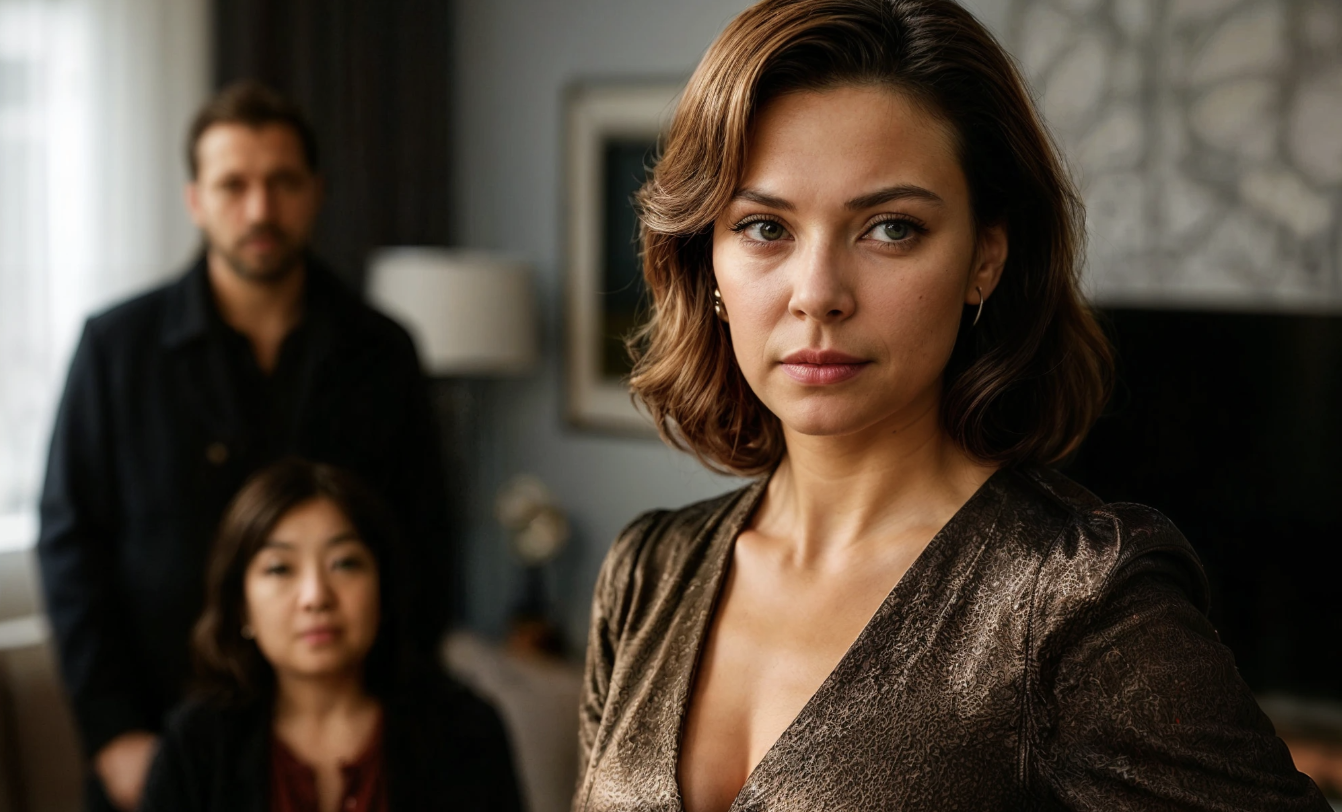
As soon as I inherited, they all came back: my ex and my mother-in-law. But I only wanted one thing — to get revenge.
Lena stood by the window of her empty apartment and looked out at the yard where her children used to play. Now Misha was twenty years old, working in St. Petersburg, and Katya was eighteen, studying at university. The apartment seemed huge and uncomfortable without their laughter, without the constant running around, without the pile of textbooks on the table.
Many years ago, when Misha was born, she quit her job in advertising. “Why do you need that career,” Andrey said back then, “I’ll earn the money, and you take care of the house and the children.” And she did. She cooked, washed, cleaned, took the kids to clubs and sections, stayed with the sick ones, helped with homework. When Katya was born, life turned into a nonstop marathon: up at six in the morning, breakfast for everyone, seeing off her husband to work, kids to kindergarten and school, then shopping, cooking, cleaning, picking up the kids, clubs, lessons, dinner, laundry, ironing… And that every day.
Andrey came home tired, ate dinner silently, and turned on the TV. On weekends, he met with friends, played football, or went fishing. “You rest at home all week,” he said when she asked him to stay home and help with the children.
And his mother, Valentina Petrovna, regularly reminded her: “Andryusha is tired at work; he needs peace at home. And what about you? Sitting at home like a lady. In my day, women worked and ran the household.” Lena was silent, gritting her teeth. Explaining was useless — her mother-in-law saw only what she wanted to see.
The years flew by unnoticed. The children grew up, became more independent. Lena began to think about going back to work, taking care of herself. She signed up for a gym, started taking care of herself, updated her wardrobe. For the first time in many years, she looked in the mirror and thought, “I’m actually not bad.”
But Andrey did not notice. Or didn’t want to notice. He started staying late at work more often, became cold and absent-minded. Then he announced that he had fallen in love with his new secretary, Alina. Twenty-five, bright, ambitious.
“Sorry, Lena,” he said while packing his things, “but I can’t do this anymore. I need new sensations, new emotions. Alina understands me, she’s so… alive.”
Lena was silent, watching her world crumble. Eighteen years of marriage, two children, shared plans, dreams — all of it turned out to be less important than a young body and admiring eyes.
Valentina Petrovna, of course, supported her son:
“What did you expect, Lena? You let yourself go completely. Sitting at home in a robe, not bothering with your appearance. Men love with their eyes. And Andrey needs a woman by his side, not a tired housewife.”
Lena didn’t remind anyone who insisted she stay at home and only take care of the family. She just left and stopped answering her mother-in-law’s calls.
The divorce went quietly. Andrey left her the apartment — apparently, his conscience still worked. He helped the children with money regularly but avoided contact with his ex-wife. Fortunately, the children were already adults and decided for themselves who and how to communicate with.
Lena got a job at a small advertising agency. Life improved slowly but surely. She learned to live alone, got to know herself again. But the pain from betrayal did not pass. It hurt most to think that twenty years of her life were needed by no one.
And then one morning, a notary from Moscow called:
“Elena Mikhailovna Voronova? Please accept my condolences. Your aunt, Anna Mikhailovna Drozdova, has passed away. You are the sole heir according to the will.”
Aunt Anya. Lena vaguely remembered this woman — her father’s sister, who had moved to Moscow many years ago and occasionally sent New Year’s postcards. They had met only a few times in childhood.
“What is included in the inheritance?” Lena asked.
“A three-room apartment in central Moscow, a collection of antiques, and two million rubles in a bank account,” the notary replied.
Lena nearly dropped the phone. Two million rubles… For her, earning forty thousand a month, it was simply fantastic money.
That same day she told her friend Marina about it. Marina was sincerely happy:
“Lena, can you imagine? This is fate! A new life in the capital, new opportunities! I’m so happy for you!”
Lena flew to Moscow to handle the inheritance. The apartment turned out to be a real treasure — an old house in Khamovniki, high ceilings, parquet floors, a tiled stove. The antiques — paintings, porcelain, silver — all worth quite a lot. Aunt Anya, it turned out, was knowledgeable about art and had spent her life collecting the collection.
While Lena was in Moscow, Marina apparently couldn’t resist telling someone from their mutual acquaintances about her friend’s inheritance. And they told others. In a small town, news spreads quickly.
When Lena returned home with the inheritance documents, she was in for a surprise. Literally the next day, a familiar jeep parked near her building — Andrey’s car.
He came up to their former apartment and rang the bell. He looked bad — gaunt, with bags under his eyes.
“Lena, I need to talk to you,” he said.
“What is there to talk about, Andrey? We said everything six months ago.”
“I was wrong. I understand now. The thing with Alina… it was foolish. I need you, our family.”
Lena opened the door but did not invite him in:
“Family? The same family you abandoned for a young mistress?”
“Forgive me. I’m a fool, an idiot. But we have so much in common! Children, years together… I love you.”
“Love?,” Lena smirked. “Strange kind of love you have. It disappears the moment you meet something newer and more attractive.”
“Lena, give me a chance. I’ve changed. Alina… she turned out to be not who I thought. Mercantile, selfish. But you… you are real.”
“Interesting,” Lena thought, “when did you realize this? Before or after you found out about the inheritance?”
The next day Valentina Petrovna showed up. She came with a cake and a bouquet of flowers.
“Lenočka, dear, how are you? I’ve missed you so much!”
“Valentina Petrovna, we haven’t spoken for six months. Why this sudden concern?”
“Oh, Lena, come on! I understand you’re upset with us. But family is sacred! Andryusha told me everything about how he regrets it. He’s my silly, impulsive son. Men sometimes do stupid things, but then they come to their senses.”
“And what are you proposing?”
“Forgive him, Lena. You were together so long, you have children… That secretary — she’s just passing through. Andryusha realized that true happiness is a home, family, a faithful wife.”
Lena listened to these speeches and was amazed. Six months ago, the same woman told her that she herself was to blame for her husband’s departure. And now she begged to forgive the “foolish son.”
“Valentina Petrovna, do you remember what you told me at the divorce? That I let myself go, that men love with their eyes?”
Her mother-in-law was embarrassed:
“Oh, Lena, I said that out of frustration. You know how much I love Andryusha, so I defended him. But actually, I always thought you were the perfect wife.”
Lena barely held back a laugh. Perfect wife — that’s when she’s needed. But when a younger replacement appeared, she immediately became the “neglected housewife.”
For a week, Andrey called every day. Sometimes begging for a meeting, sometimes sending flowers, sometimes coming and standing under the windows. Valentina Petrovna did not lag behind — she called, cried on the phone, begged “not to ruin the family.”
Lena suffered. On the one hand, it was pleasant to see them humiliate themselves and ask for forgiveness. On the other — she wanted revenge. But how?
She imagined different scenarios. She could agree to meet Andrey, give him hope, and then publicly humiliate him — invite him to a restaurant and announce to everyone what a scoundrel he was. Or agree to reconciliation, live with him for a month or two, then kick him out again — let him feel what it’s like.
But all these options seemed petty, unworthy. And there was no time for games — she had already submitted documents to a local real estate agency to sell her apartment and planned to move.
The decision came by itself after a conversation with her son. Misha called from St. Petersburg:
“Mom, dad says he wants to come back to the family. He says he was wrong.”
“And what do you think about it?”
“What can I think? You are adults, figure it out yourselves. But my personal opinion is he made his choice six months ago. Too late to scramble now.”
“Mish, would you mind if I moved to Moscow?”
“Mom, I’m all for it! You lived all these years for us, for the family. Now live for yourself. You have a chance to start a new life — take it.”
After that conversation, Lena realized: the greatest revenge is not humiliating Andrey or his mother. The greatest revenge is her happiness. Her new life. Her freedom.
When Andrey called again and asked for a meeting, she agreed. They met in a café near her home.
“Thank you for coming,” he said. “I hoped…”
“Andrey, I want to tell you something. You ask for forgiveness, want to come back. But you forgot one important detail.”
“What?”
“I don’t love you anymore.”
He turned pale:
“That can’t be. We have so much in common…”
“Yes, we have children, shared memories. But love… it left the moment you told me you fell in love with another. When you said I became uninteresting, that you needed new sensations.”
“But I changed! I understood what I did!”
“You understood it after you learned about my inheritance. Funny, isn’t it?”
Andrey blushed:
“What does the inheritance have to do with it? I didn’t know anything…”
“Didn’t know? Then where did this sudden enlightenment come from? Why now did you remember your love for me?”
He was silent, looking at the table.
“You know, Andrey, I’m grateful to you. You set me free. Eighteen years I lived according to your interests, adjusted to your desires, raised your children. And now I have a chance to live for myself.”
“Lena…”
“I’m moving to Moscow. Starting a new life. And you know what’s the most interesting? I’m happy. For the first time in many years, I’m truly happy.”
Andrey sat silently, then quietly asked:
“And what should I do now?”
“I don’t know. It’s your life, your choice. You wanted freedom — you got it. Enjoy it.”
Lena stood up and went to the door. At the door, she turned around:
“And tell your mother: don’t call me anymore. I hold no grudge, but I’m not going back to the past.”
At home, she turned off the phone and began packing. The apartment was already sold, the buyers promised to pay in a week. All that was left was to pack the essentials and send them to Moscow.
In the evening, Marina called:
“Lena, where are you? The whole town is gossiping that you sent Andrey packing and are moving to the capital.”
“And what’s to gossip about? They’re right.”
“But he regrets it! Maybe you should give him a chance?”
“Marina, would you give a chance to a husband who left you for a young mistress? And give him a chance right when you got some money?”
Marina fell silent.
“See? I already gave him twenty years. That’s enough.”
A week later, Lena stood in Aunt Anya’s Moscow apartment, looking out at the ancient streets of Khamovniki. Here was silence, peace, history. Here she could start anew.
She took out her phone and wrote to her children: “Come visit. We have a home in Moscow now.”
Then she sat at Aunt Anya’s antique writing desk and began to make plans for her new life. At forty-two, she was finally free. Free to be herself, to do what she wanted, to build her own plans.
Revenge? Yes, she got her revenge. The best way — with her happiness. Let Andrey and his mother now know: the woman they considered a “neglected housewife” managed to build a new life. Without them. And she is happy in this life.
And that, perhaps, is the sweetest revenge of all.